
Last updated
How Often Should Septic Tank Cleaning Happen?
Tank size and household size drive the schedule more than the calendar does. A residential septic tank is typically pumped every 3 to 5 years, and that range comes straight from usage, not from a fixed date on a sticker. A family of six generates more solids than a couple living alone, so the smaller household stretches toward the 5 year mark while a full house leans toward 3. If you want the specific math for your setup, how often to pump a septic tank in South Bend walks through it in more detail than we can fit here. South Bend Porta Pros tracks service dates for repeat customers so nobody has to remember the last pump date from memory. Waiting too long between cleanings pushes solids into the drain field, and that repair costs far more than a pumping visit ever will. If you are not sure where your tank sits in that cycle, book a look before symptoms show up, not after.
What Does Septic Tank Cleaning Include?
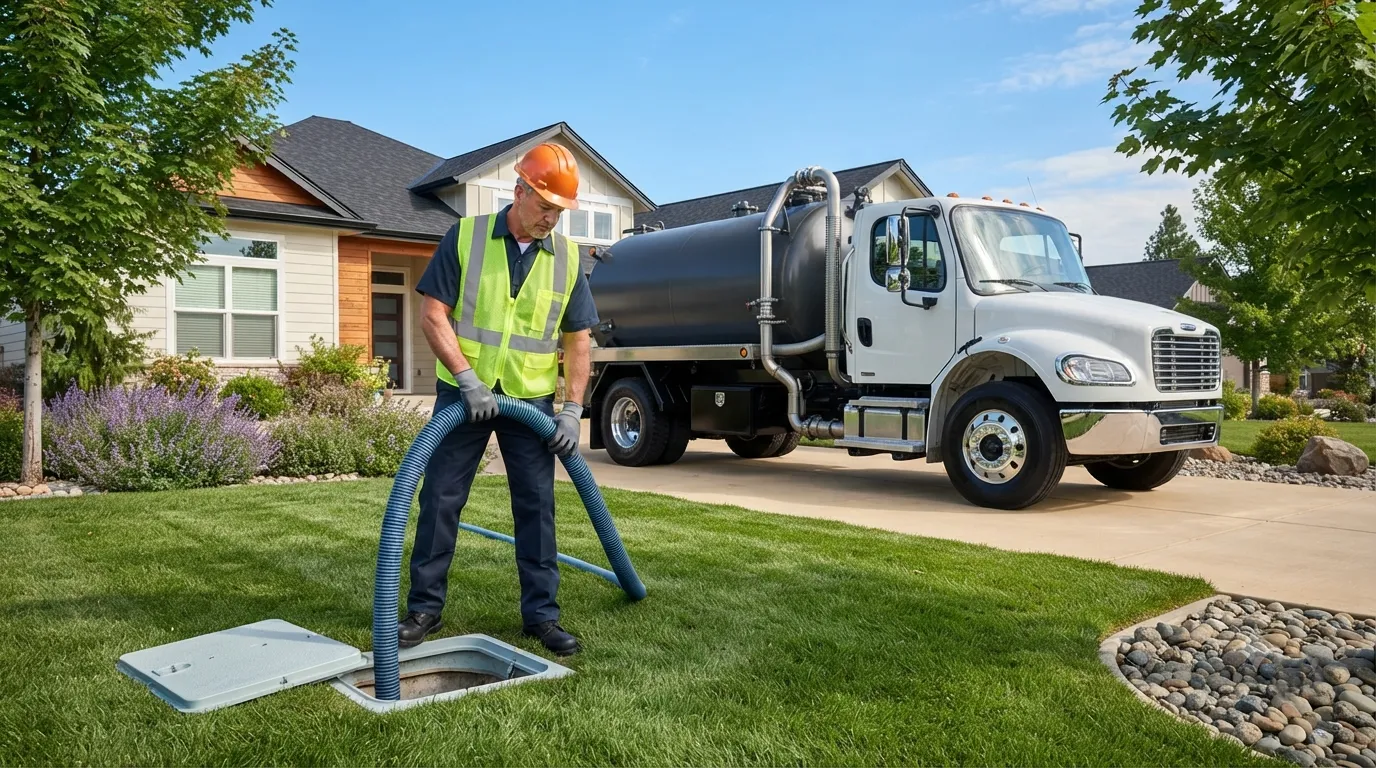
A full cleaning is more than sucking liquid out of a hole in the yard. The crew pumps the tank, breaks up the sludge layer, checks the outlet baffle, and inspects the filter if your tank has one. Cleaning a septic tank filter matters on its own: a clogged filter backs water up into the house long before the tank itself is full, and it is a five minute check once the tank is open. We also look for cracks, root intrusion and standing water near the drain field while we are there, since that is the cheapest time to catch a problem. Compare that scope against septic tank warning signs if you are trying to figure out whether you need a cleaning now or can wait. Homes running a garbage disposal hard, or with a grease trap in the mix, tend to need attention sooner. Restaurants and commercial kitchens fall under different rules entirely; a grease interceptor gets pumped once fats, oils, grease and solids reach 25 percent of the liquid depth, which is a separate service covered on grease trap pumping.
What Does Septic Tank Cleaning Cost in South Bend?
Pricing depends on tank access, tank size and how long it has been since the last pump. Here is what typical visits run:
| Service | Duration | Typical Range |
|---|---|---|
| Septic pumping visit | day rate | $150 to $300 |
| Septic pumping, short-notice weekend | weekend | $50 to $150 |
Those figures come from measured job data, not a quote sheet, so your actual price depends on how many gallons the tank holds and whether the access lid is buried under landscaping. For a broader breakdown of what changes the number, see septic tank pumping cost in South Bend and septic tank cleaning cost for line-item detail. If you are comparing this against renting a holding tank instead of servicing an existing system, holding tank rental covers that option separately. South Bend Porta Pros quotes the job after a quick look at tank size and access, not off a generic per-visit number, because a tank buried three feet down with no riser takes longer than one with a surface lid.
Why Does Septic Tank Cleaning Matter for South Bend Properties?
South Bend sits on a mix of older residential lots and newer development, and septic systems on both ends of that spread fail the same way: slowly, then all at once. A tank that backs up in January is a different job than one caught in July, and winter service around South Bend adds its own complications with frozen ground over the lid. Skipping a scheduled cleaning does not save money, it just moves the cost to a drain field replacement, which runs into thousands rather than hundreds. Properties near Notre Dame, 3.0 miles northeast of South Bend, and out toward Mishawaka, 5.9 miles east, deal with the same soil and freeze-thaw cycle we see across South Bend proper, so the maintenance interval does not really change by neighborhood. What changes is access. Older homes sometimes have tanks under driveways or additions built after the system went in, and that adds time to the job regardless of location. If your property needs regular commercial service instead of a one-time cleaning, septic pumping service covers scheduled routes.

Do I Need an Emergency Septic Cleaning or Can It Wait?
Sewage backing up into a drain, gurgling pipes, or standing water over the drain field mean call now, not next week. Anything short of that, and a scheduled cleaning within the next few weeks is fine. Emergency septic service covers the same-week and same-day cases; a routine 3 to 5 year cleaning does not need that urgency. South Bend Porta Pros runs both, but pricing and dispatch differ, so it helps to know which category your situation falls into before you call. If the issue is really a portable toilet or event sanitation question instead of a fixed tank, portable toilet rental and septic tank cleaning's cluster pillar, septic pumping service, are the better starting points.
How much does septic tank cleaning cost near South Bend?
Typical pumping visits run $150 to $300 for a day-rate service call, with weekend short-notice work closer to $50 to $150 depending on scope. Tank size, access and time since last pump all move the number. See septic tank pumping cost for the full breakdown by scenario.
How often should I get septic tank cleaning done?
Every 3 to 5 years for a typical residential tank, driven by household size and tank capacity rather than a fixed date. Larger households or heavy disposal use push that toward the 3 year end. Check how often to pump a septic tank for specifics.
What happens if I skip septic tank cleaning out too long?
Solids build up past the outlet baffle and move into the drain field, which clogs the soil and forces a much more expensive repair or replacement. A missed cleaning is cheap to fix immediately and expensive to fix later. Warning signs are covered on septic tank warning signs.
Can I clean a septic tank filter myself?
You can rinse a filter, but pulling it, inspecting the baffle and checking tank levels safely is worth leaving to a crew with the right equipment. A clogged filter causes household backups before the tank itself is full. We check it as part of every cleaning visit.
Is septic tank cleaning different from grease trap pumping?
Yes. Septic tanks handle household wastewater on a 3 to 5 year cycle, while a grease interceptor gets pumped once fats, oils and solids reach 25 percent of liquid depth, often much more frequently. Commercial kitchens need grease trap pumping instead of standard septic service.

Next step
Get a delivery date
Tell us the address, the dates and the headcount. We size the order and confirm the route.