
Last updated
How fast can you set up sanitation after a disaster?
Speed matters more than anything else in a relief response. South Bend Porta Pros treats storm and flood callouts like emergency porta potty rental requests, moving them ahead of routine deliveries. A roll-off delivery truck needs about 60 feet of straight clearance behind it to place a unit, so we scout driveways and lots before the truck rolls, which matters when streets near South Bend are blocked by debris or standing water. If a shelter or command post is running without water pressure, a portable sink rental or handwashing station rental can go out alongside the toilets, since OSHA 1926.51(a)(1) calls for an adequate supply of potable water at any place of employment, and that same logic applies to relief staging areas. For sites where responders are decontaminating equipment or handling chemical spills, OSHA 1926.51(f)(1) requires washing facilities where paints, coatings, herbicides, insecticides or similar contaminants are present, and we plan handwash placement around that. We also carry temporary fencing and crowd control barrier rental for perimeter control around damaged structures, plus light tower rental and a temporary power pole when the grid is still down. Every unit we place gets serviced on the ANSI/PSAI Z4.3 baseline interval of once a week for up to 10 users, though disaster deployments usually run tighter than that.
What do you provide for shelters and staging areas?
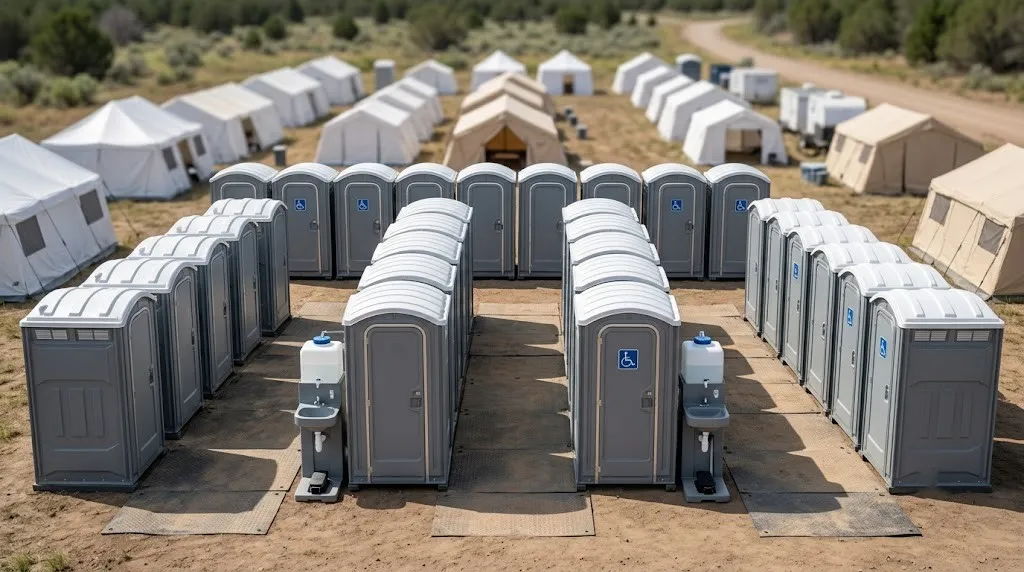
A shelter running for displaced residents needs toilets, handwashing and often a place to store donated supplies, all inside a compressed timeline. We size toilet counts the same way a construction employer would under OSHA 1926.51(c)(1): one toilet seat for 20 people or fewer, then one seat and one urinal per 40 as headcount climbs past that, up to one per 50 at 200 or more. That guide holds up well for a shelter population too. A standard unit holds 60 to 70 gallons and stands about 92 inches tall on a 44 by 48 inch footprint, small enough to tuck beside a gym entrance or church hall without blocking a fire lane. For sites needing a dignified option, the deluxe flushable porta potty and restroom trailer rental options give staff and families something closer to a real bathroom. Accessibility does not get skipped in a crisis: ADA Standards section 213.2 requires at least 5 percent of a cluster of single-user units to be accessible, never fewer than one, so we always include an ADA accessible porta potty on multi-unit shelter deployments. If the relief operation needs secure space for bottled water, medical supplies or donated goods, a storage container rental or mobile office trailer rental can sit next to the restrooms. Debris cleanup afterward usually calls for a roll-off dumpster rental, sized against our dumpster sizes and dimensions guide.
Can you handle septic backup and flooded systems too?
Yes, and this is often the part people forget until a tank is already overflowing. Flooding pushes groundwater into septic systems and can back up a line fast, so emergency septic service and septic pumping service run alongside our toilet deployments during a South Bend disaster response. A typical residential septic tank is pumped every 3 to 5 years under normal conditions, but a flood event can force an off-cycle pumping regardless of when the tank was last serviced, and our how often to pump a septic tank page walks through that math. If a system is failing outright, our septic tank warning signs guide helps a homeowner or facility manager catch it early next time. Restaurants and shelters running temporary kitchens also need to watch grease buildup, since a grease interceptor is pumped once fats, oils, grease and solids reach 25 percent of the liquid depth, and grease trap pumping keeps that from becoming its own emergency. For sites without working plumbing at all, a holding tank rental bridges the gap until permanent service is restored. We coordinate all of it from a South Bend base, so response times to nearby communities stay short: Mishawaka sits 5.9 miles east, Notre Dame 3.0 miles northeast, and Elkhart 16.6 miles east, all within normal same-day dispatch range.
How many toilets does a disaster shelter actually need?
It depends on headcount, using the same ratio OSHA 1926.51(c)(1) sets for job sites: one unit per 20 people up to 20, then one seat and one urinal per 40 above that. Our how many porta potties do I need guide runs the numbers for your expected shelter population.
Do you charge extra for emergency or after-hours calls?
Emergency response often carries a premium over routine scheduling, reflected in our weekend and rush service fees. Call South Bend Porta Pros directly for a same-day quote, since disaster pricing depends on scope, unit count and how fast the site needs coverage.
Can you supply handwashing stations without running water?
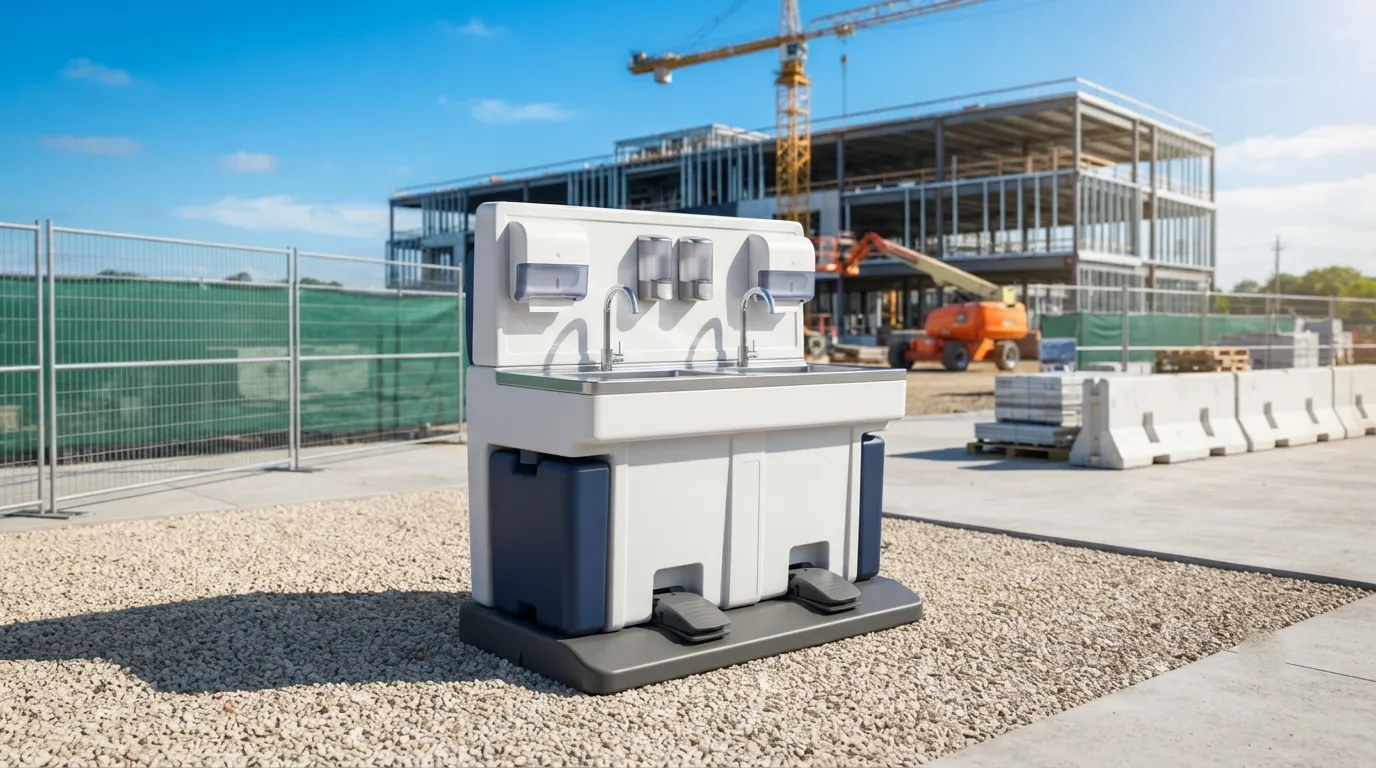
Yes. Our stations carry their own water supply and meet 29 CFR 1910.141(d)(2), which requires soap and towels or a hand-drying device, not sanitizer alone. See handwashing station requirements for full detail.
What if the site has no clear road access after a storm?
We still need roughly 60 feet of straight clearance behind the delivery truck. If debris blocks that path, tell us when you request a quote so we can plan a smaller unit or alternate placement.
Do you serve towns outside South Bend during regional disasters?
Yes. We regularly dispatch to Mishawaka, Notre Dame, Elkhart, Goshen and La Porte; check service areas for full coverage and current response radius.
Next step
Get a delivery date
Tell us the address, the dates and the headcount. We size the order and confirm the route.