
Last updated
What is a portable sink and how does it work?
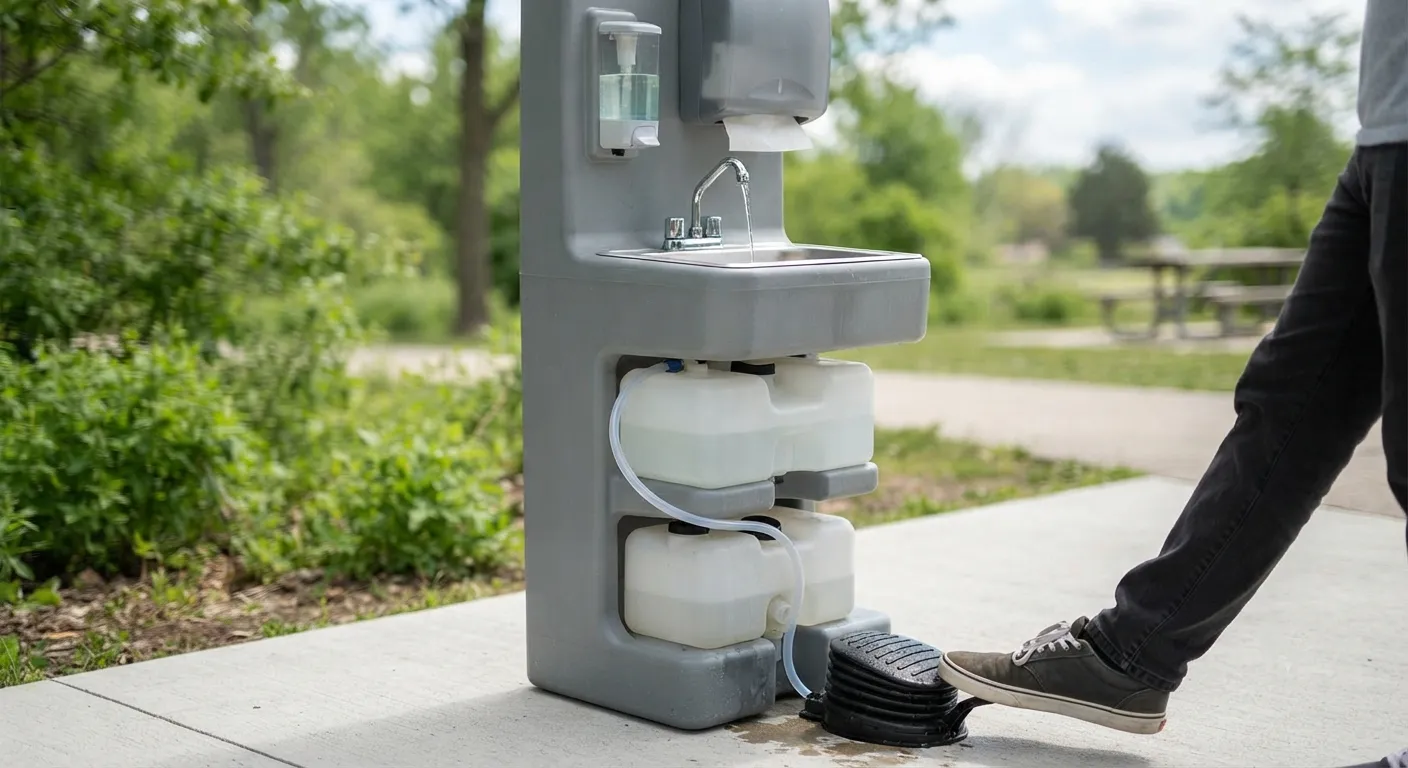
A portable sink station is a self-contained unit: fresh water tank, pump, basin, and a gray water tank underneath to catch what drains out. No plumbing hookup needed. Most units run off a foot pump or a small battery pump, and some come with a hot water option for washing hands or washing hair at an event or campsite. South Bend Porta Pros builds these around the same 60 to 70 gallon tank spec used across our standard porta potty rental line, so service crews already know the fill and pump-out routine. That matters on a construction site services job where the same driver handles toilets, sinks, and a handwashing station rental on one visit. If your crew is applying paints, coatings, or pesticides, OSHA 1926.51(f)(1) requires washing facilities for that specific work, and a portable sink covers it without hauling a trailer. For general jobsite handwashing beyond that contaminant rule, most crews just want a working station near the portable toilet rental units, not a citation to justify it.
Why do I need a portable sink for hair washing?
Because a hose and a bucket don't cut it for a real hair-wash setup, whether that's a film shoot, a race weekend, or a camp. A portable sink for hair needs steady water pressure and a basin deep enough to lean into, which is why we spec these differently than a basic hand-wash unit. South Bend Porta Pros rents portable sink and water tank combos sized for that use on film set restroom rental jobs and at marathon and race restroom stops, where runners want to rinse off between legs. A hot water portable sink option is worth it here too. Cold tank water in a South Bend spring works for hands; it doesn't work for a scalp. We also place these near our restroom trailer rental units at bigger events, since guests expect the sink and the stall close together, and a shower trailer rental is the next step up if hair washing is the main event, not an add-on.
Where should a portable sink station go on site?
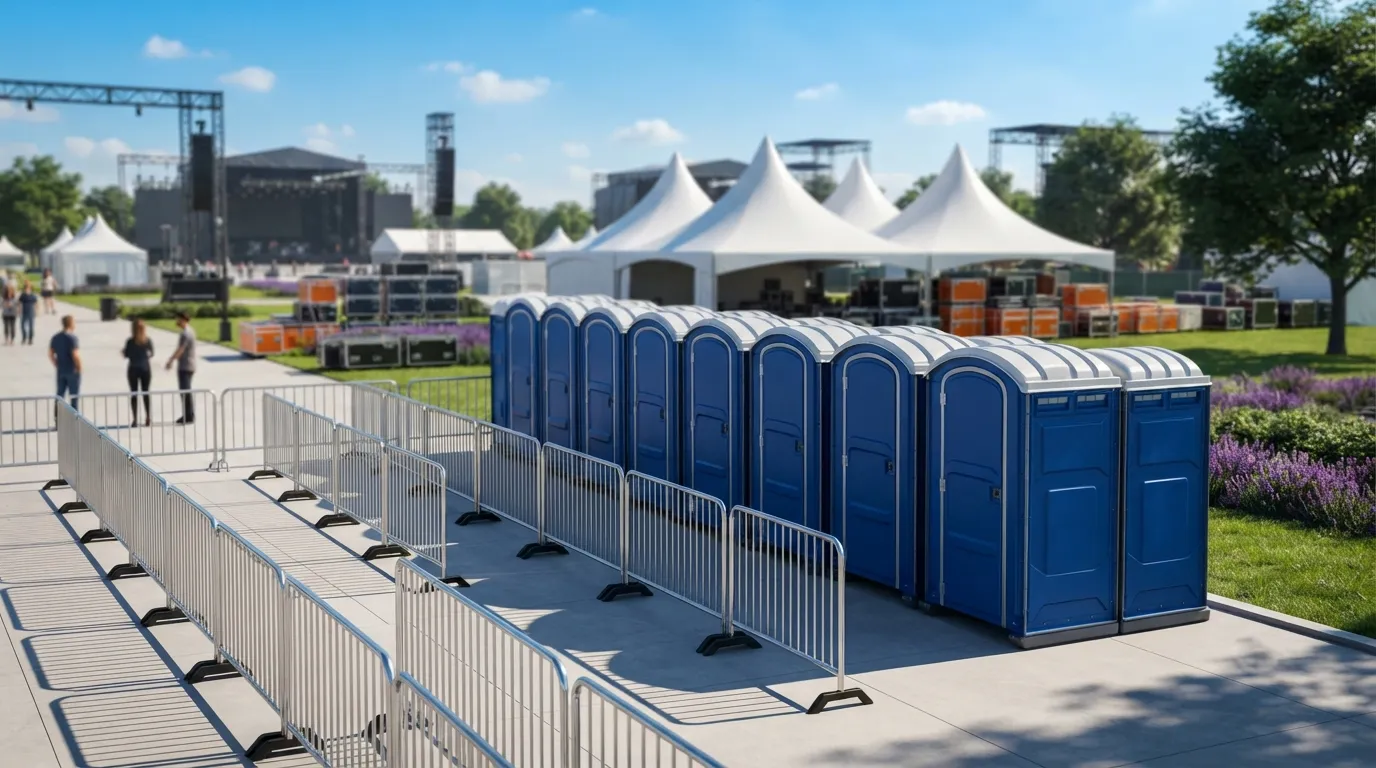
Set it near the toilets, on level ground, and close enough to a delivery path that our truck can reach it without backing through the whole lot. A roll-off delivery needs about 60 feet of straight clearance behind the truck, and sink stations get delivered by the same trucks, so the same clearance rule applies. On a construction site, ADA Standards section 403.5.1 sets a 36 inch minimum clear width for the accessible route leading to any unit, and section 304.3.1 calls for a 60 inch turning circle at the sink or toilet pad if you're clustering ADA accessible porta potty units with a wash station. We serve South Bend proper, plus Notre Dame about 3.0 miles northeast and Mishawaka 5.9 miles east, and placement rules don't change much between those job sites. Check our porta potty placement guide before delivery day if you're unsure where the pad needs to sit relative to power and water access.
Can I rent a portable sink for a jobsite or just events?
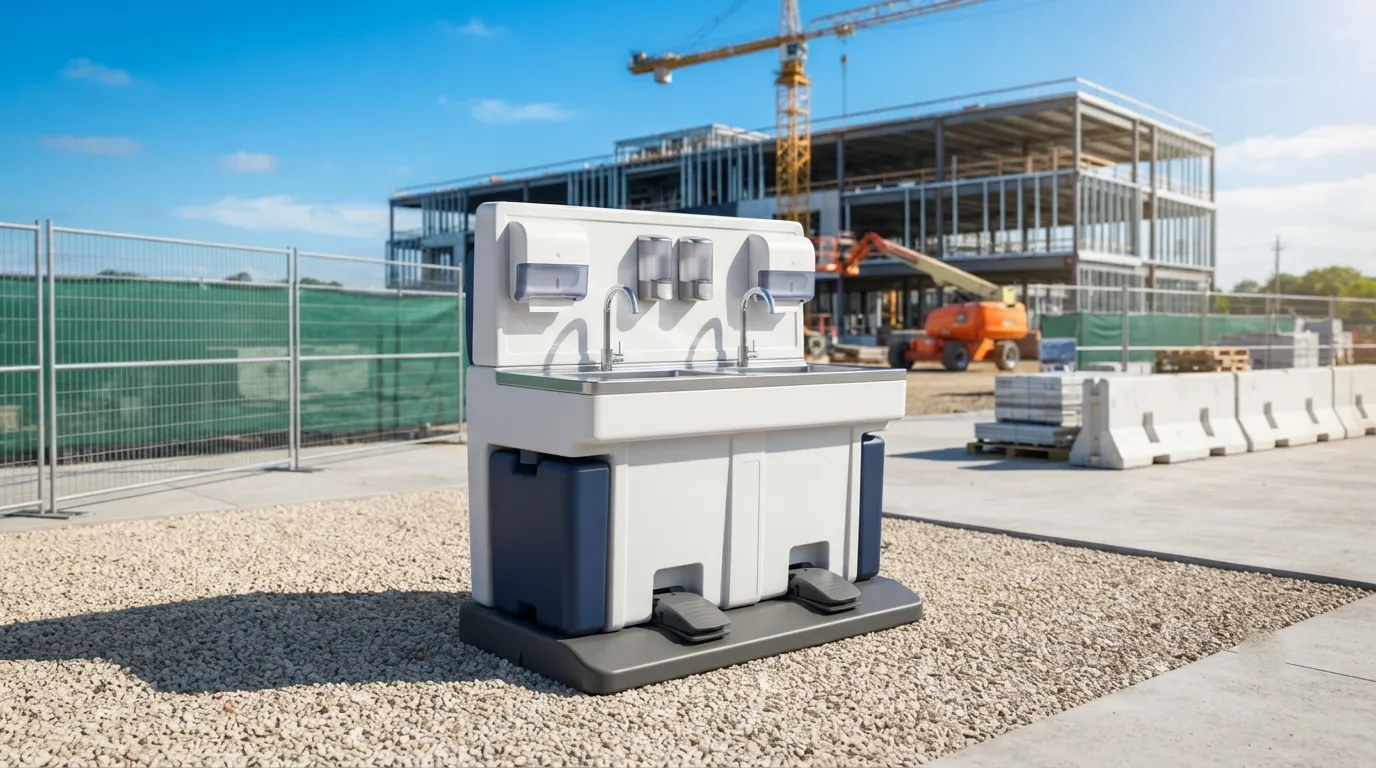
Both. Contractors rent portable sink stations by the month for ongoing crews, and event planners rent them by the day or weekend for a single date. 29 CFR 1910.141(d)(2) requires washing facilities to have soap and towels or a hand-drying device, not just sanitizer, which is why our stations come stocked, not empty. Ag operations fall under a different rule: OSHA 1928.110 requires field sanitation with potable water and handwashing for hand-labor employees, sited within a quarter mile walk of the work, one facility per 20 workers, which is worth knowing if you're setting up for farm and agricultural restrooms work outside town. For a home renovation porta potty job or a short-term site in South Bend, a weekly rental usually makes more sense than daily. Pair the sink with temporary fence rental if the site needs to stay secured overnight, and check handwashing station requirements if you're bidding a contract that specifies compliance in writing.
| duration | typical use |
|---|---|
| day | single event or delivery |
| week | short jobsite run |
| month | ongoing construction crew |
Pricing follows the same day-week-month pattern as our other units; see portable toilet rental per day and monthly porta potty rental for the ranges we work within, since sink stations get quoted alongside toilets on most job orders.
How much water does a portable sink tank hold?
Most of our sink stations use the same 60 to 70 gallon tank as a standard restroom unit. That's enough for a work crew across a shift without a mid-day refill, though high-traffic events may need a same-day top-off, which our South Bend drivers can schedule.
Do portable sinks need a power hookup?
No. Most run off a foot pump or battery-powered pump, so there's no 200 amp service or generator required. If you want hot water, some units carry a small heater that still runs off the same battery system, no external power needed.
How often does the water tank get serviced?
Service follows the same interval as our restroom units: ANSI/PSAI Z4.3 sets one visit per week as the baseline for up to 10 users across a 40 hour week. Heavier use, like an event, may call for a mid-week refill and gray water pump-out.
Can a portable sink sit next to an ADA unit?
Yes, and it should. ADA Standards section 213.2 requires at least 5 percent of clustered toilet units to be accessible, never fewer than one, and the sink pad needs the same 36 inch clear path under section 403.5.1 as the toilet itself.
Is a portable sink enough for OSHA compliance on paint jobs?
For washing after paints, coatings, herbicides or insecticides, OSHA 1926.51(f)(1) requires washing facilities, and a portable sink satisfies that. General jobsite toilet counts still fall under OSHA 1926.51(c), so you likely need both a sink and enough porta john rental units for headcount.
Next step
Get a delivery date
Tell us the address, the dates and the headcount. We size the order and confirm the route.